
Residency showing, April 2026
IN ARI The Old Lockup Maroochydore
IN | SITE Residency
Encountering the Other: Light and Weight in the Sculptural Works of Odessa Mahony-de Vries
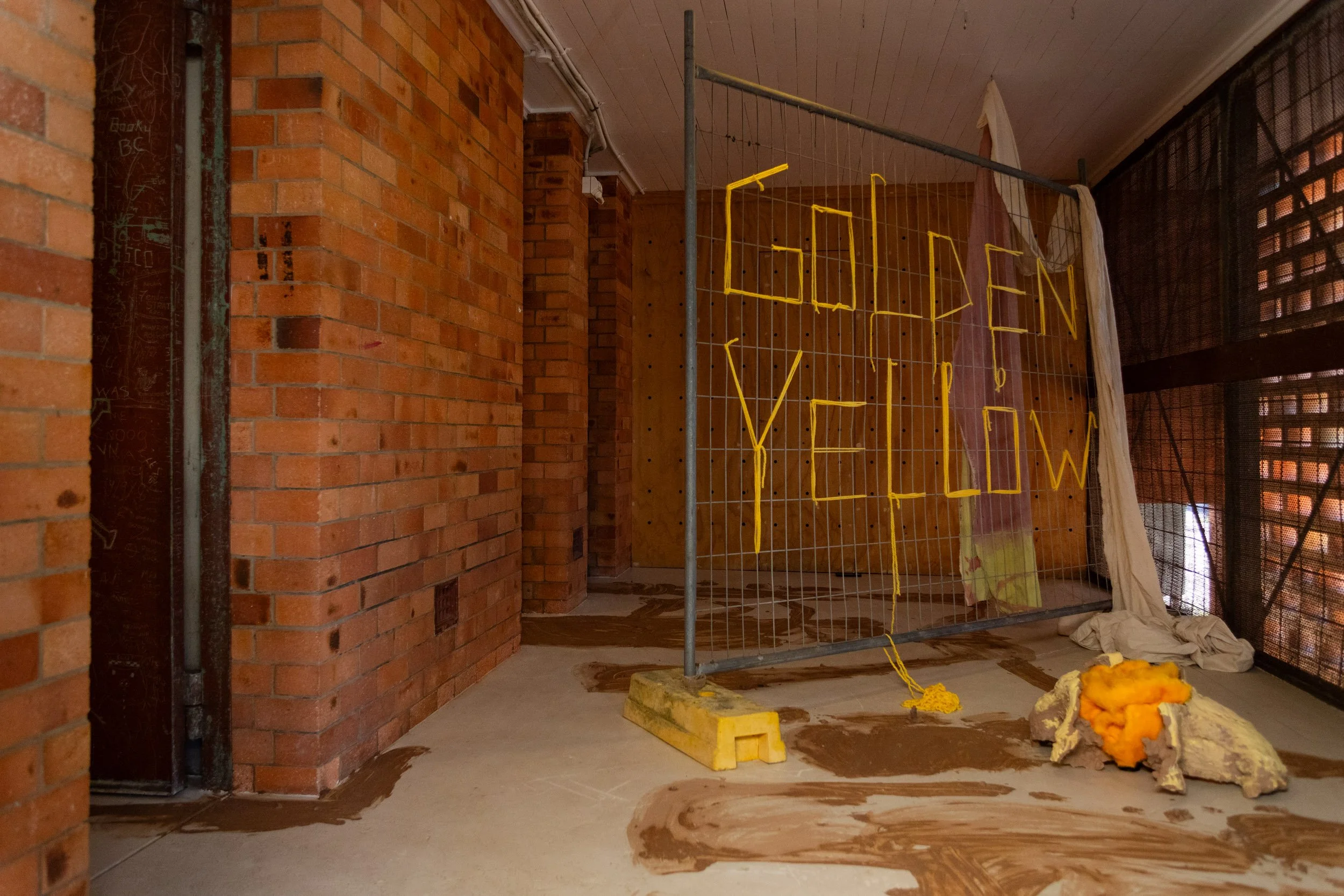
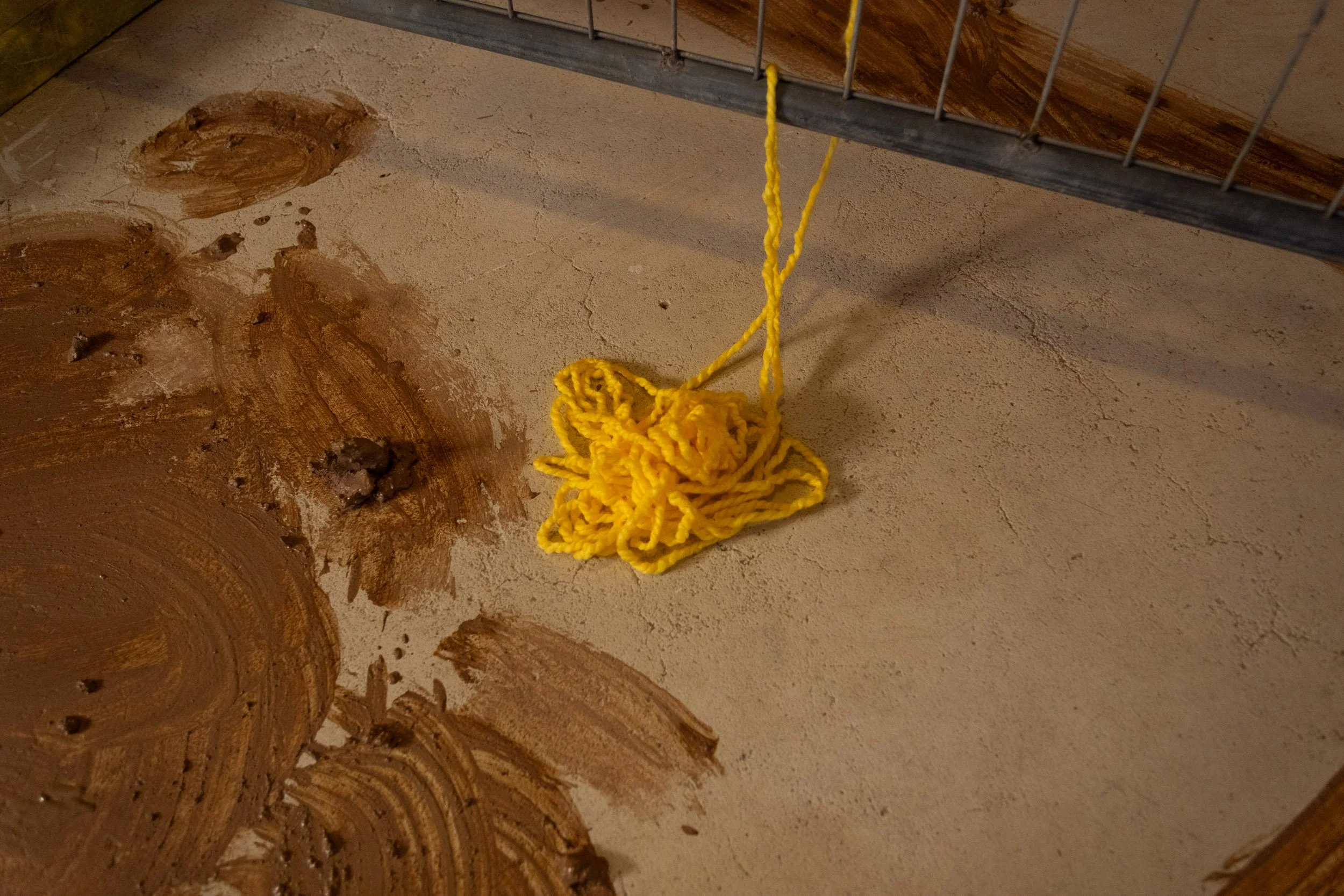
Amongst the solitary walls of The Old Lock Up in Maroochydore, the words ‘Golden Yellow’ loom in the entrance, loosely stitched in yarn. Such a luminescent phrase seems out of place within three inoperative holding cells. For the artist Odessa Mahony-de Vries, who is of Dutch and Indonesian heritage, this encroaching sense of ambiguity is not unfamiliar. Where ‘yellow’ evokes imagery of sunlight for some, those belonging to the Asian-Australian diaspora may recall penetrative gazes and strangers questioning, “where are you from?” With curiosity and light, Odessa is working out what it means to have ‘mixed’ heritage, and how this liminality may fit within her practice.
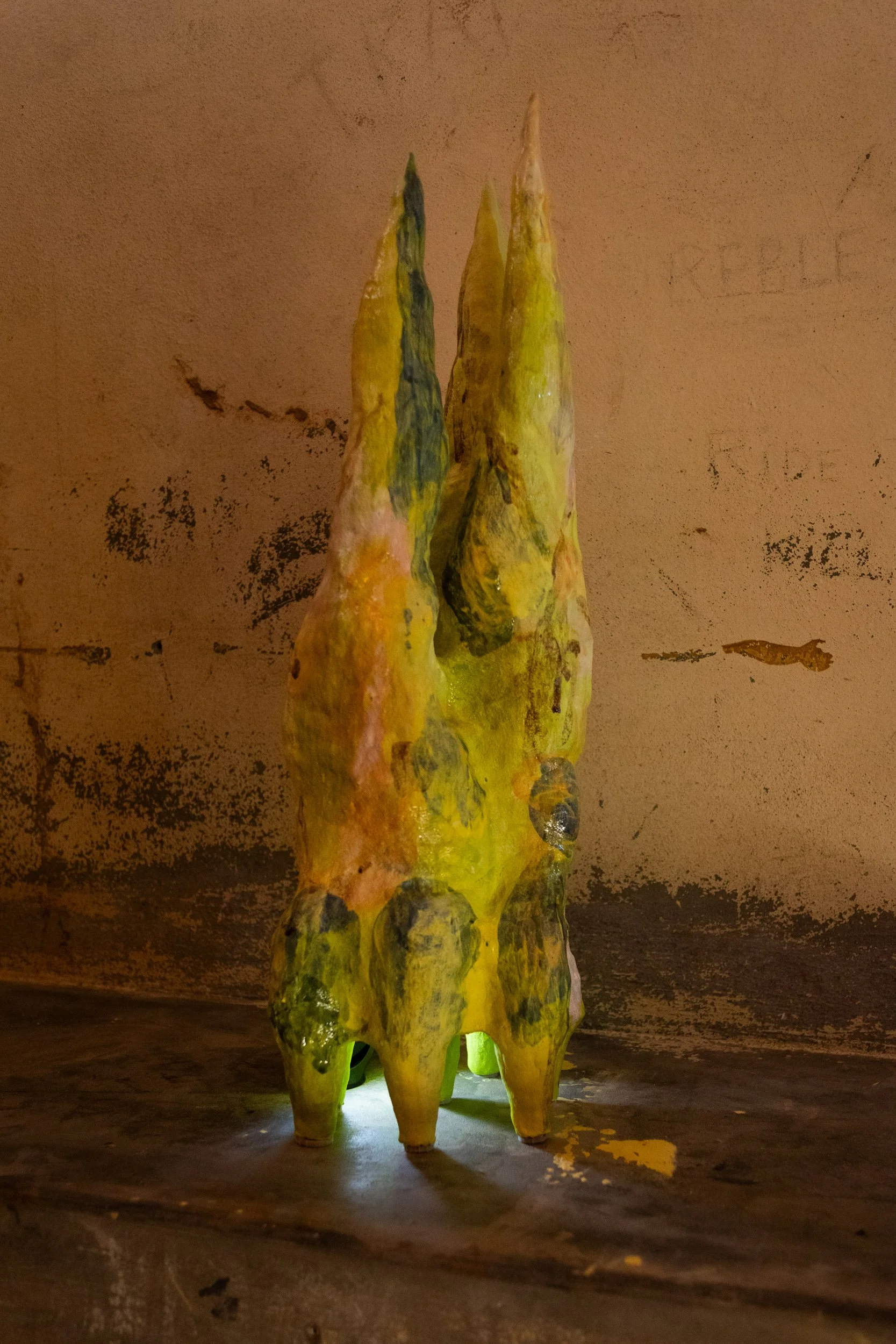
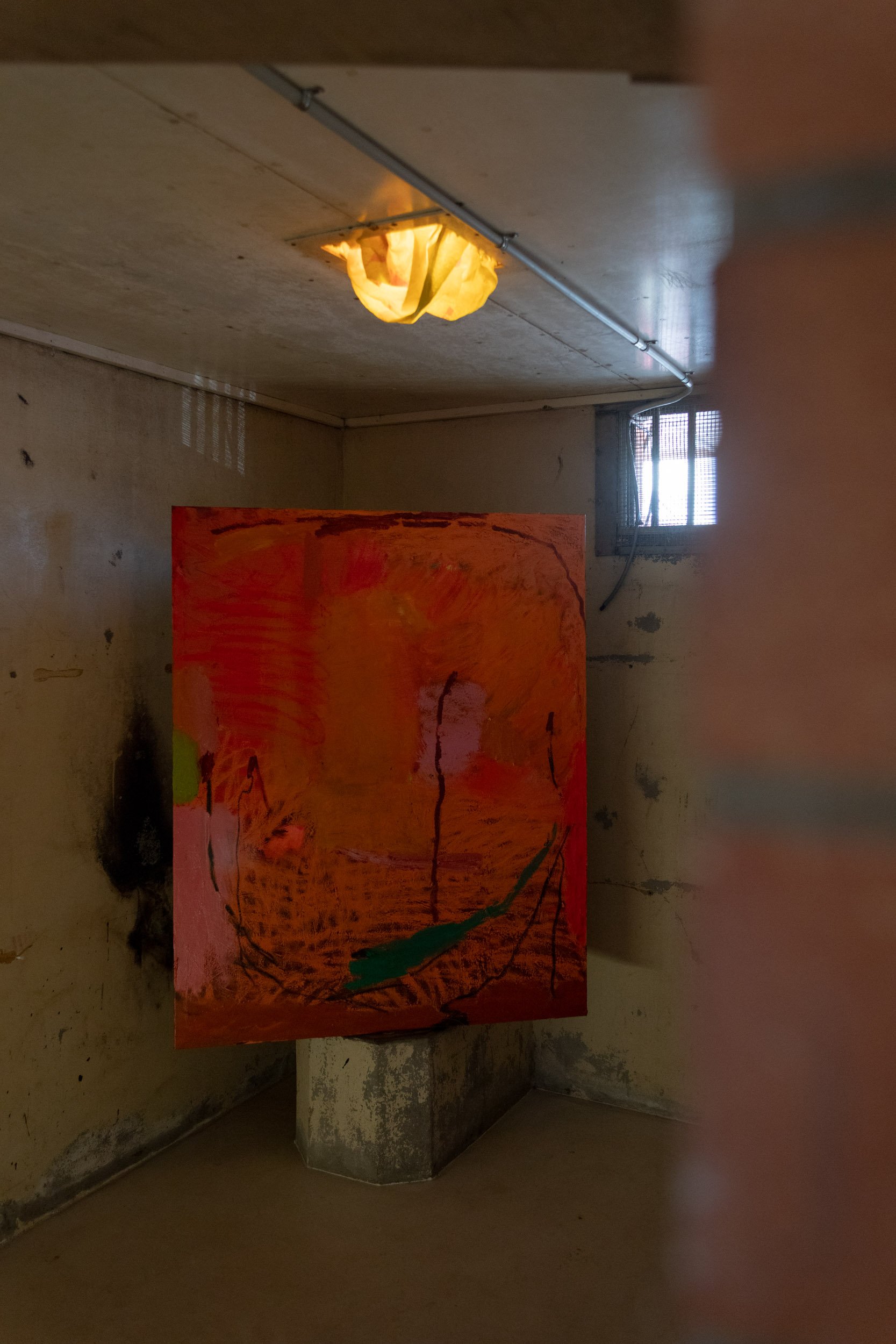
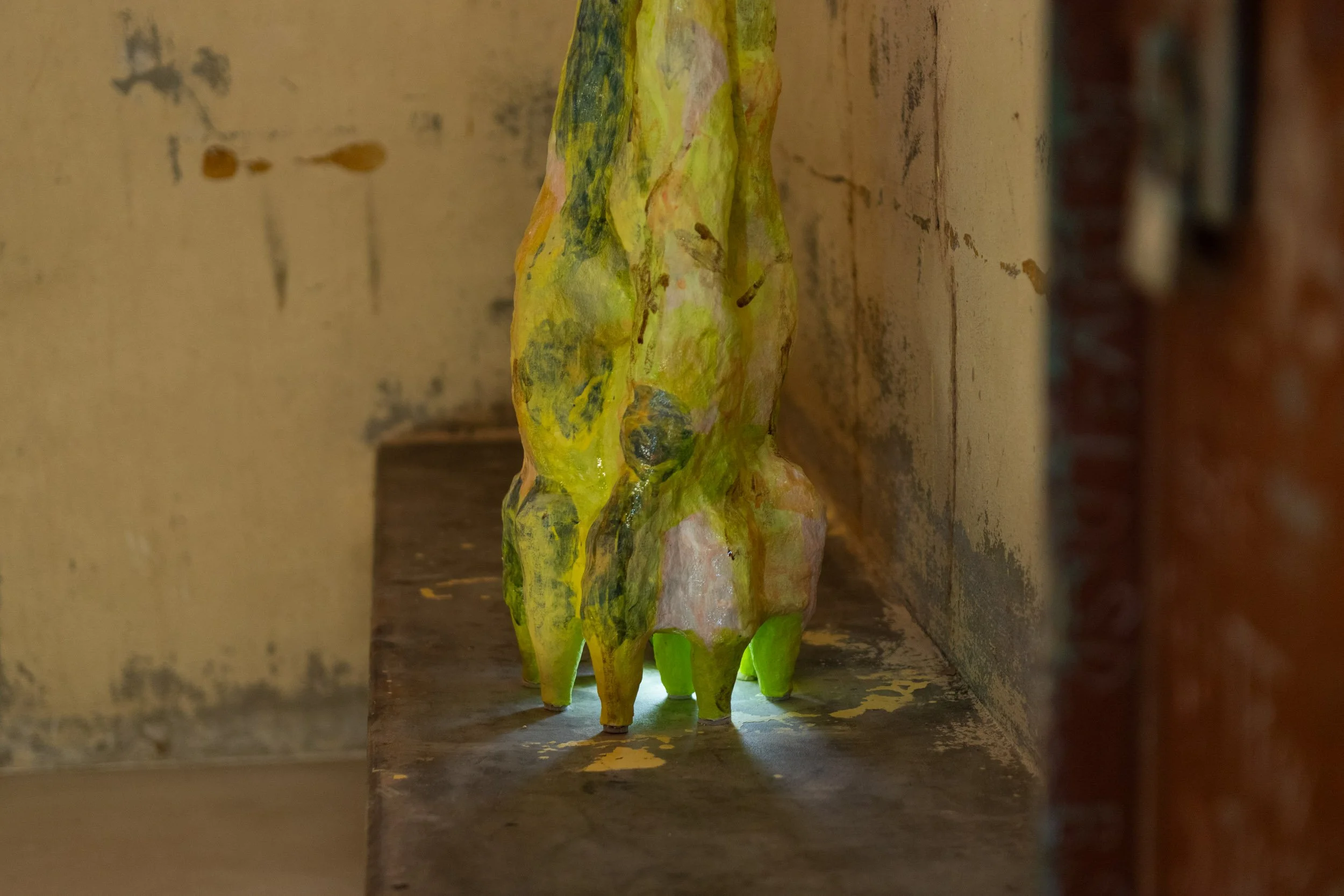
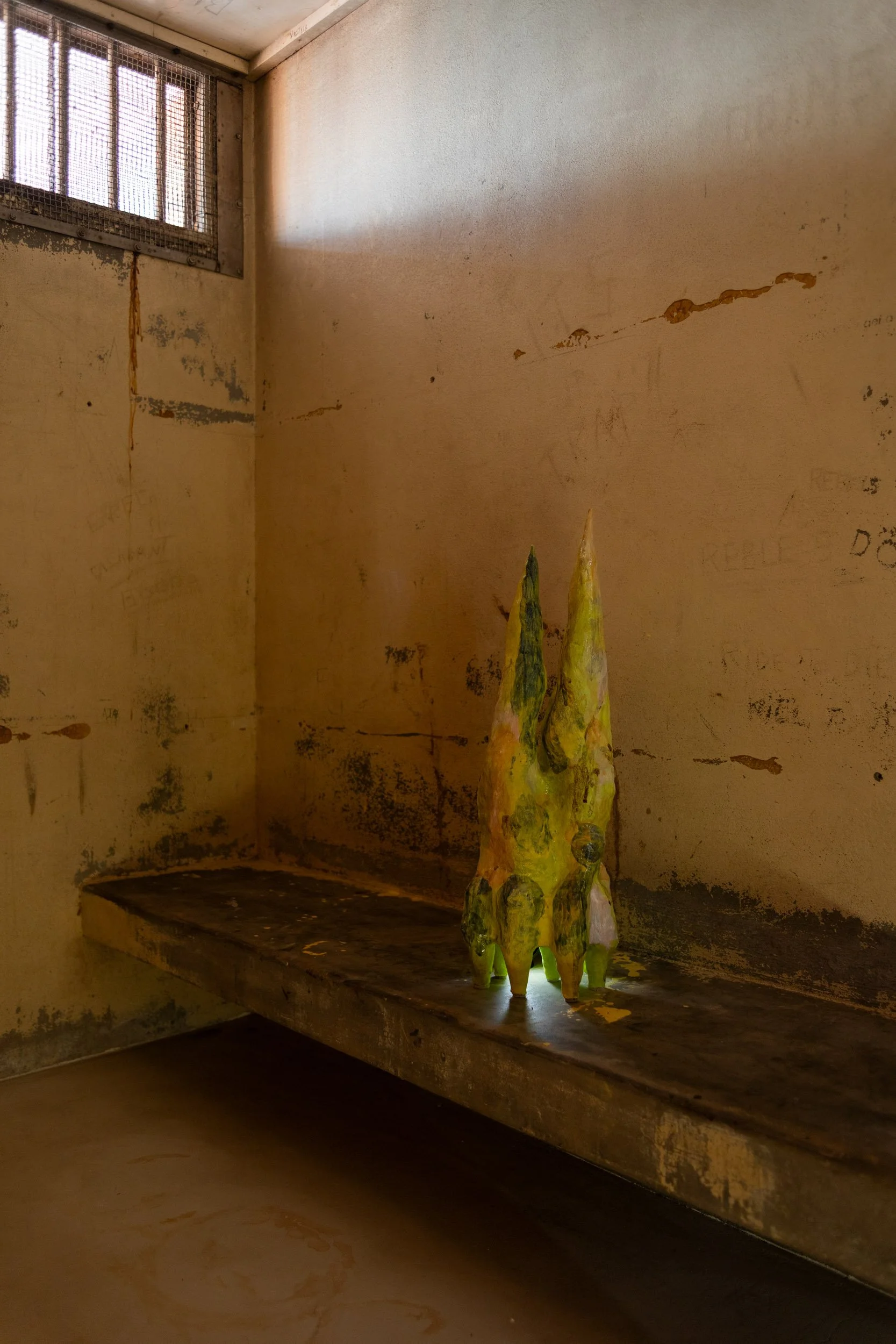
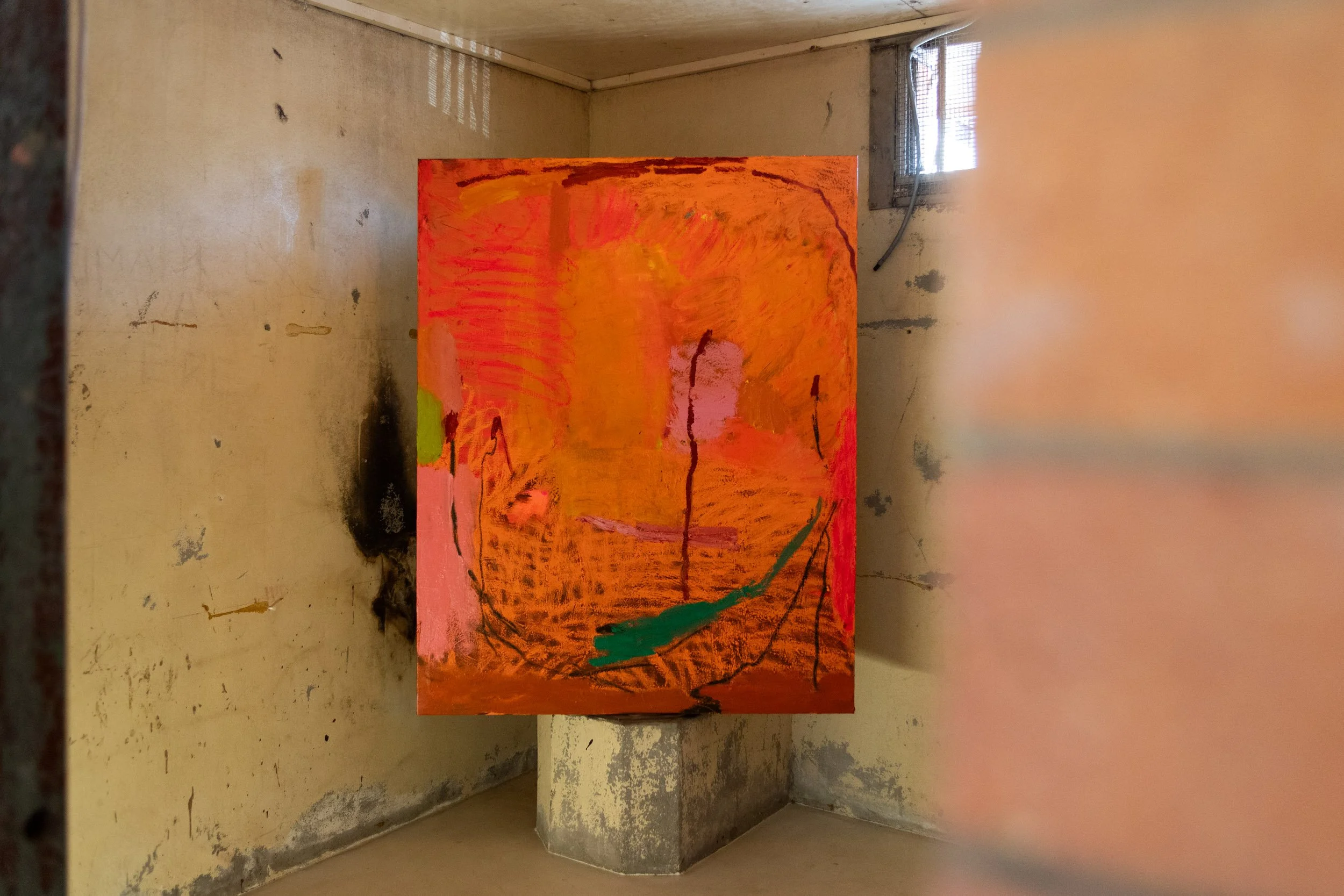
Occupying the first cell stands a vivid oil painting reflecting Odessa’s recognisable process of abstraction. As though etched into the walls itself, her scattered brush strokes are a seamless extension of the layered histories and graffitied concrete that the exhibition inhabits. Across the room, a sculpture tapers into finely edged spikes, fighting against the smooth and pliable materiality of clay. The hybrid form appears as though it was situated there long ago, crystallising throughout years of desolation. There exists synergy between the painting and sculpture; both clad in bright colours that cut through shadows. Despite being ambivalent in their forms and relationship, the artworks suggest that belonging can emerge in the face of ambiguity—they need not cancel each other out.
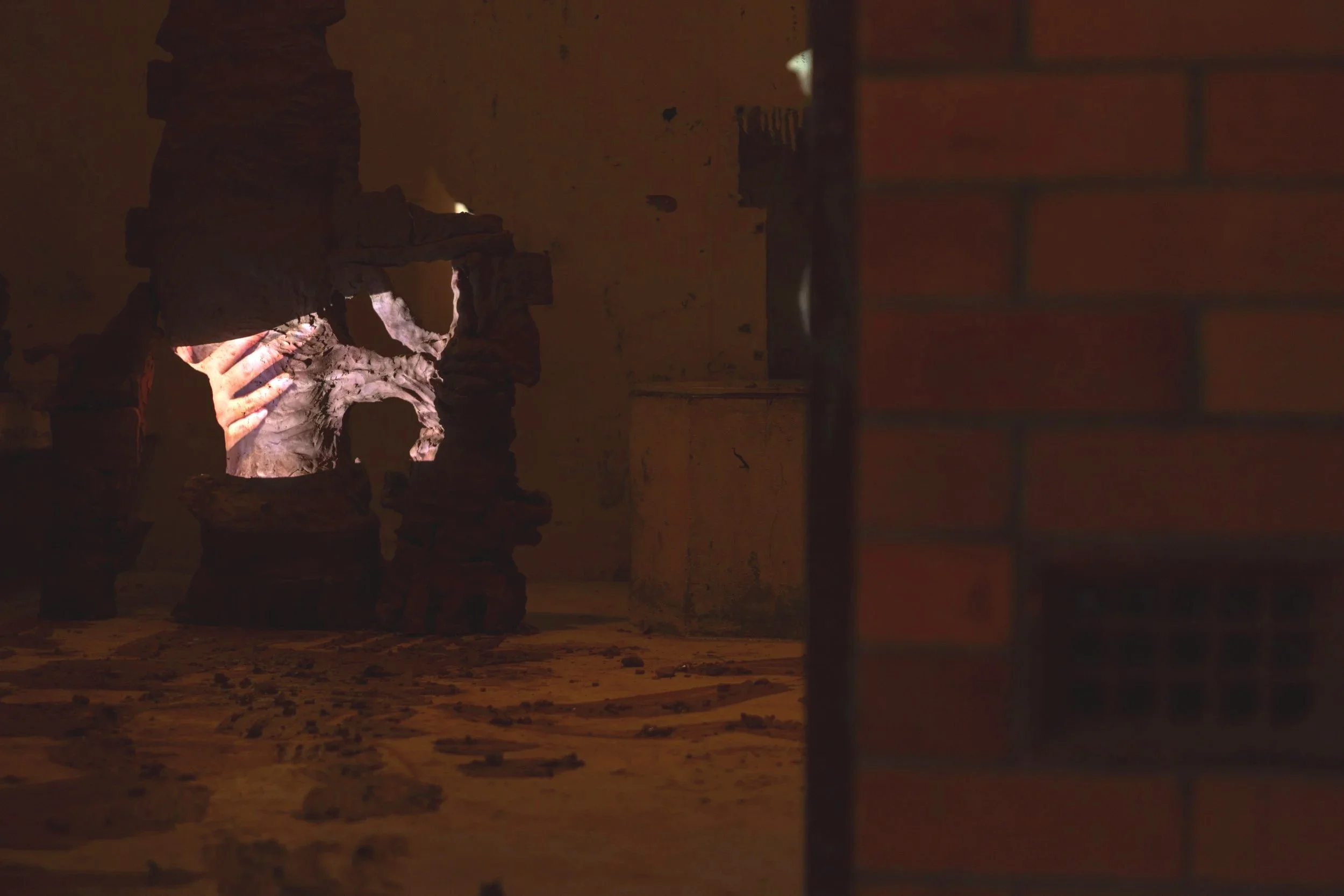
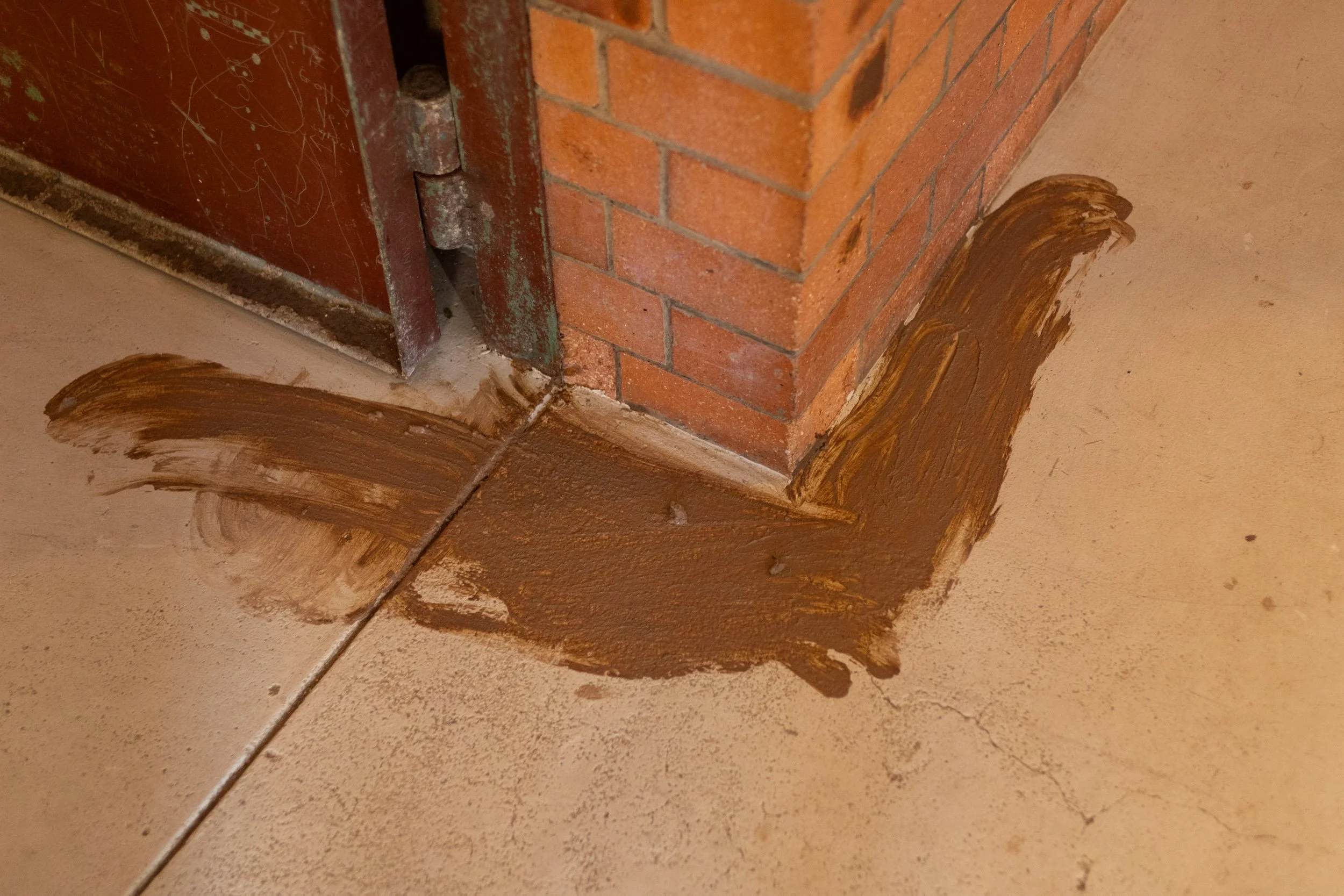
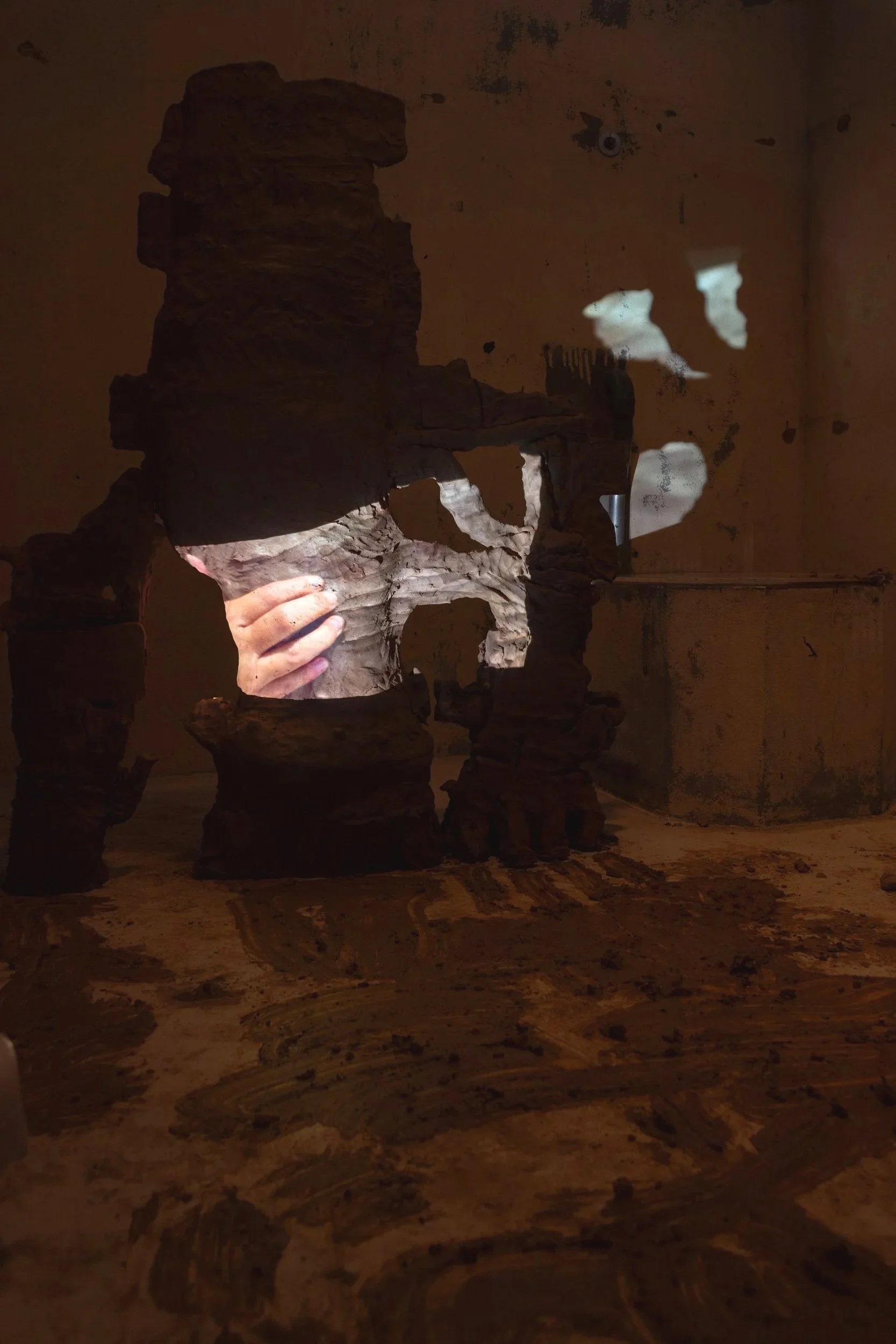
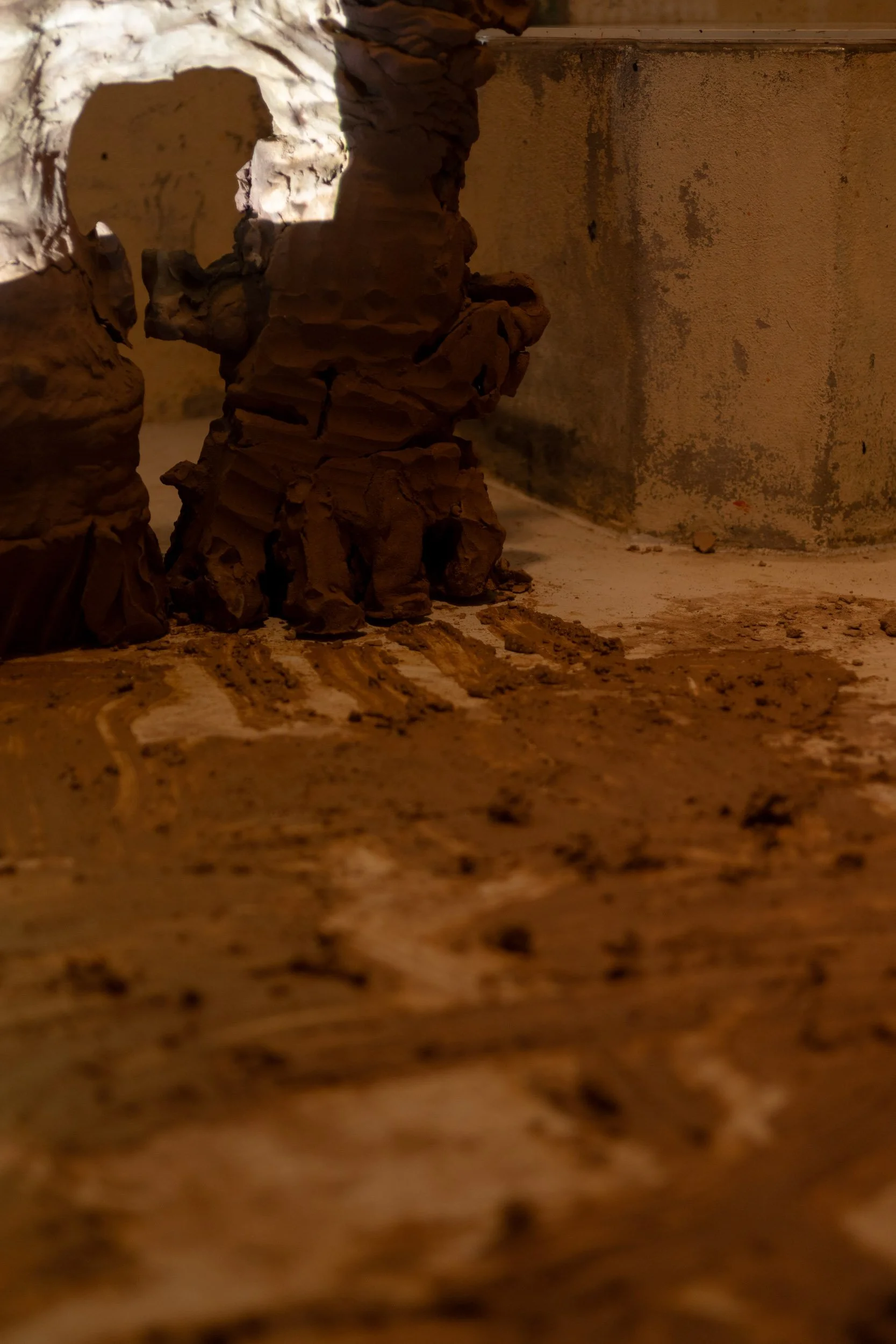
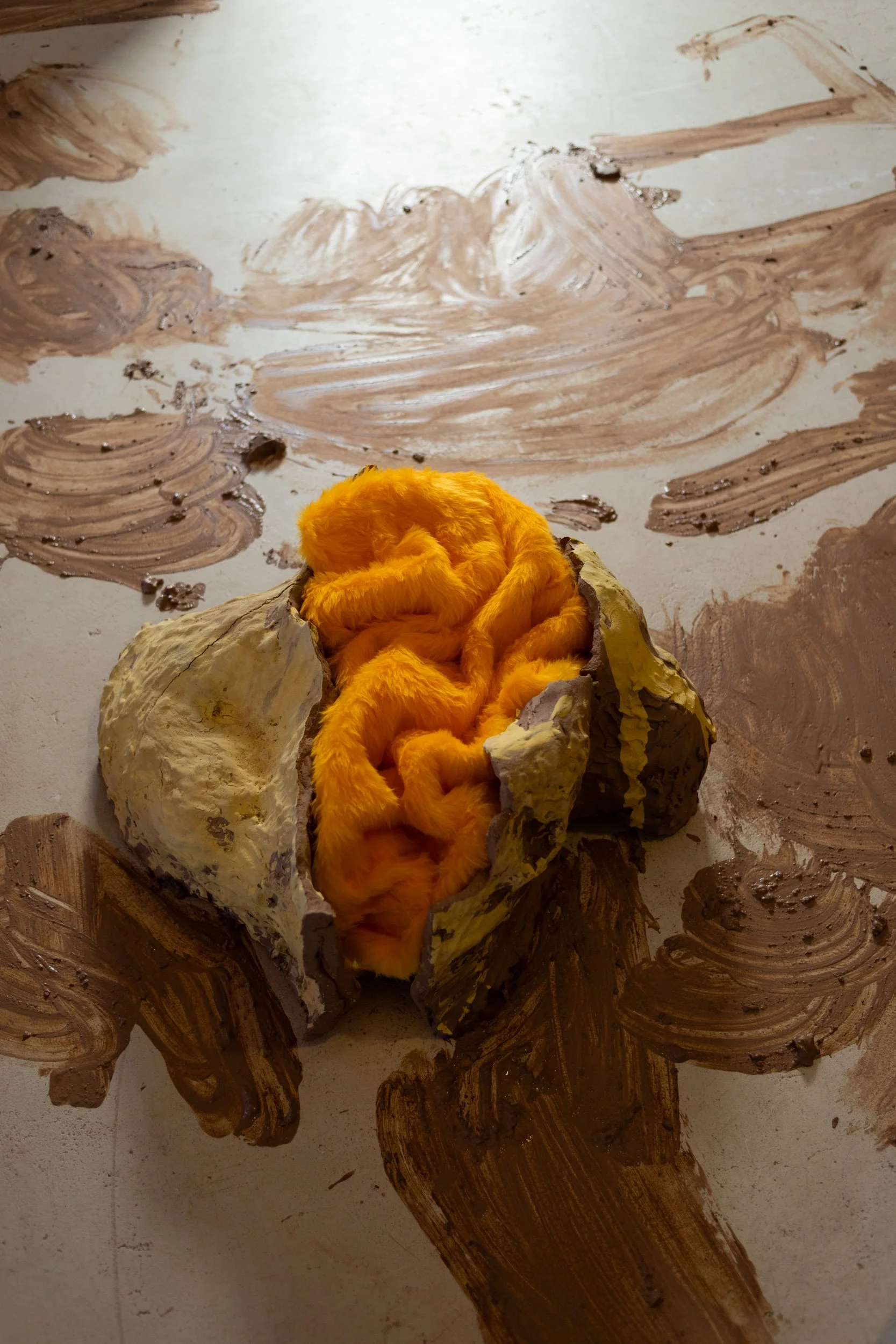
As though having dragged itself, a jagged path of clay guides you to the second cell where a mound of earth stands upright, breaking off into sprawling limbs. Her finger marks are left to dry on this cyborg-like creature. Perhaps similar to the experiences of those with mixed heritage, the sculpture’s identity becomes increasingly ambivalent with the continued layering of surfaces.
Her hands, filmed during the process of sculpting, are projected over the figure; endlessly grabbing, pulling, and moulding clay. For those categorised as ‘racially ambiguous,’ this invasive touch is nothing unordinary; with sticky hands that claw at tanned skin, or stranger’s fingers combing through your hair. Odessa’s handprints viscerally portray the processes of objectification and voyeurism faced by bodies deemed ‘Other.’
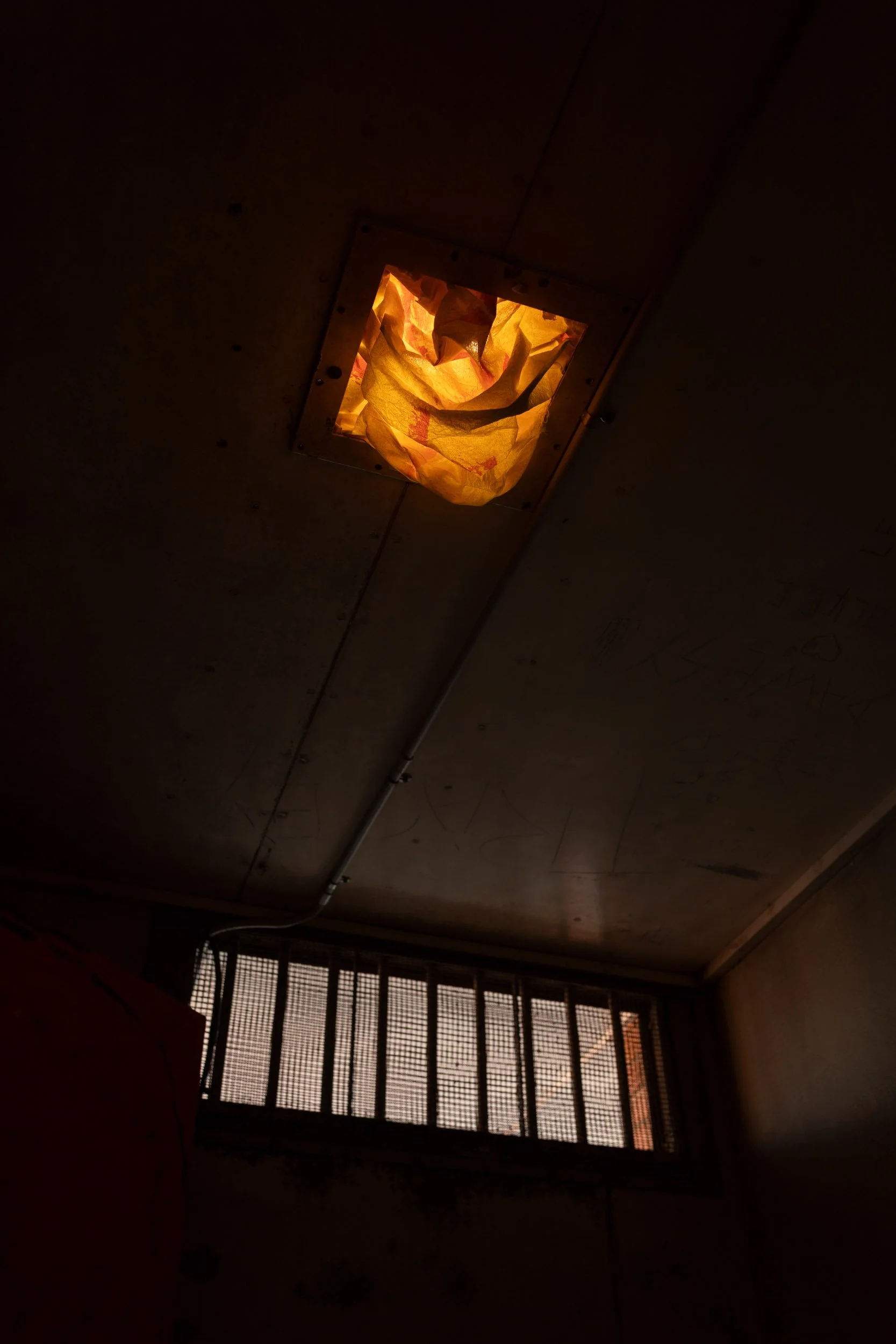
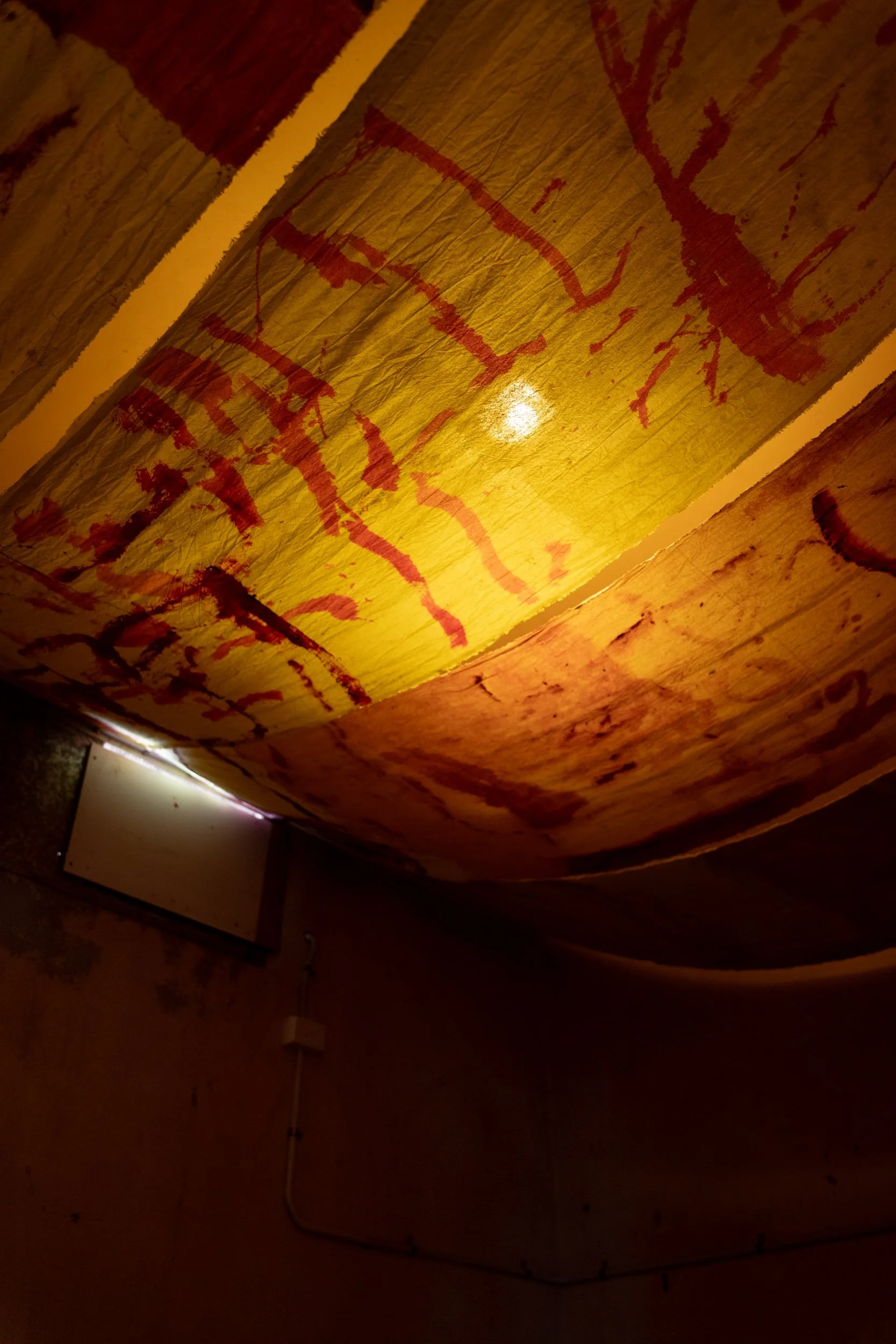
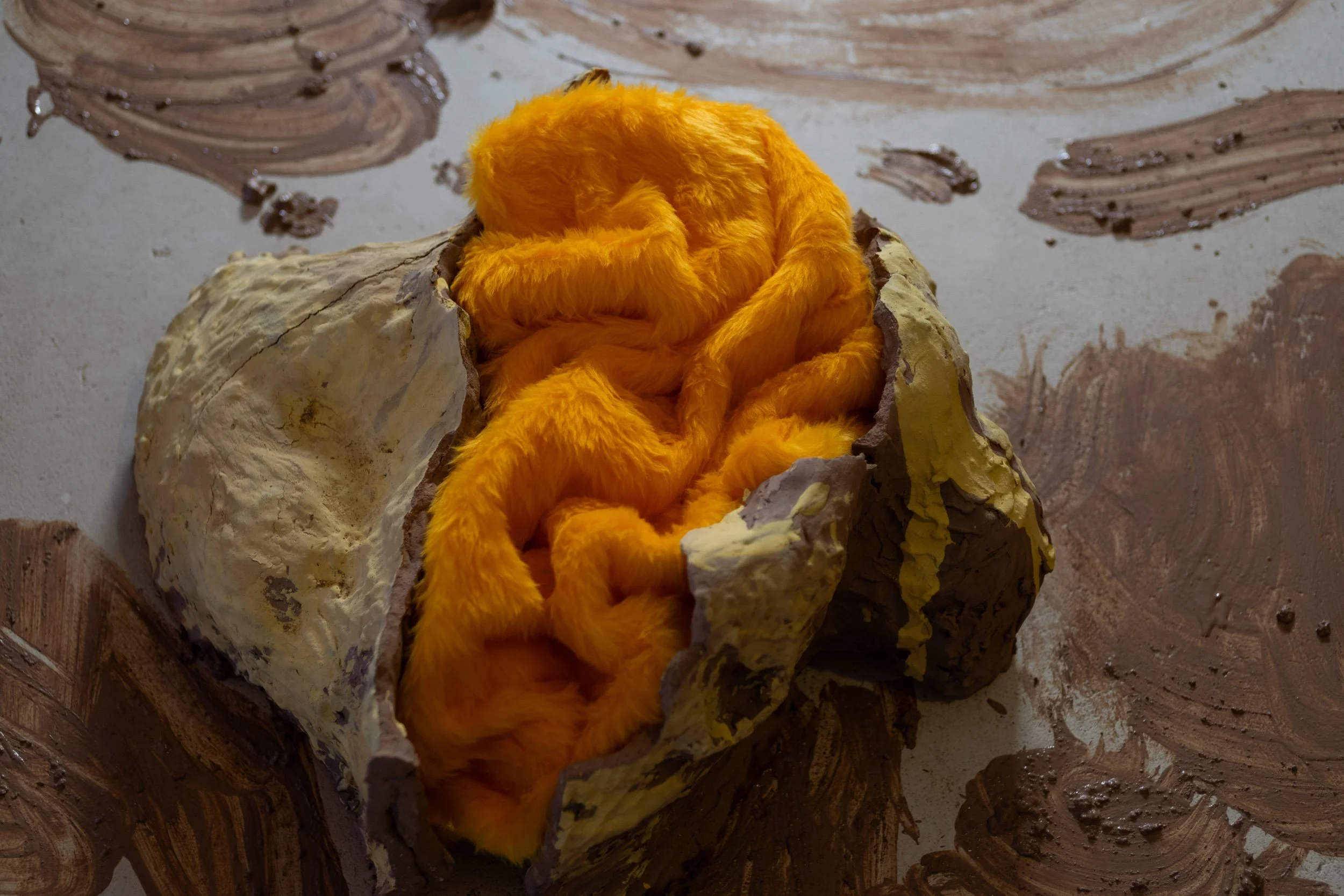
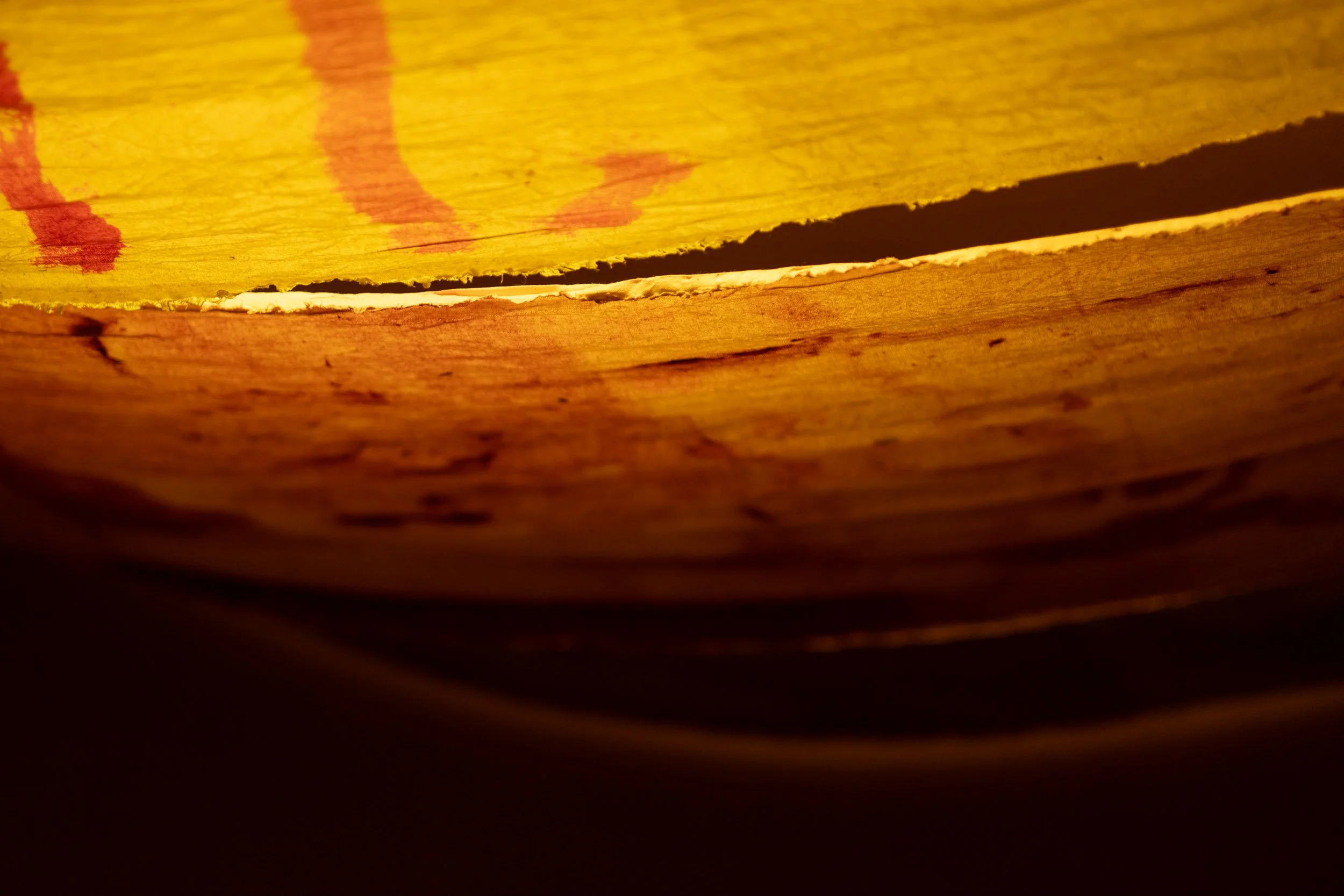
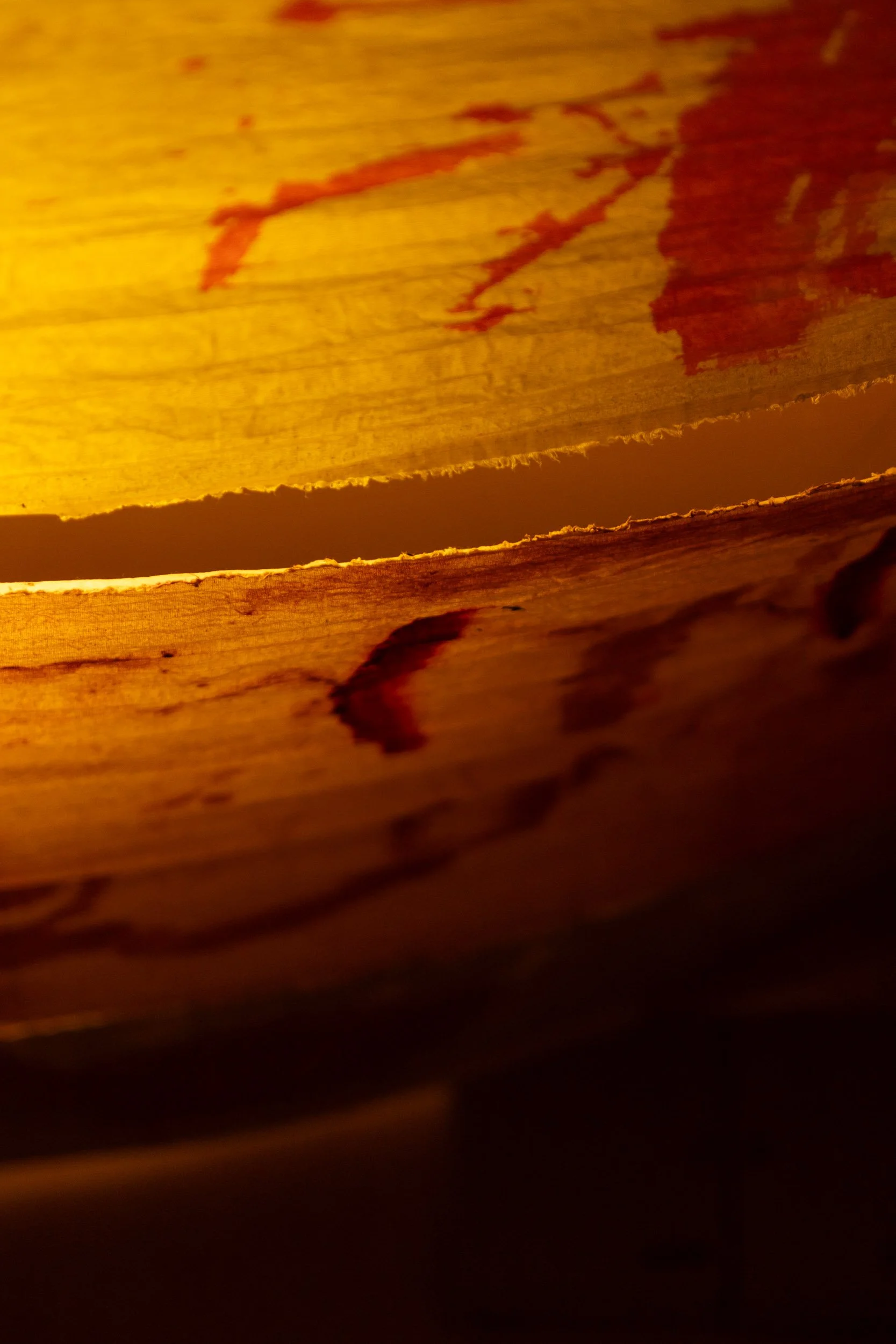
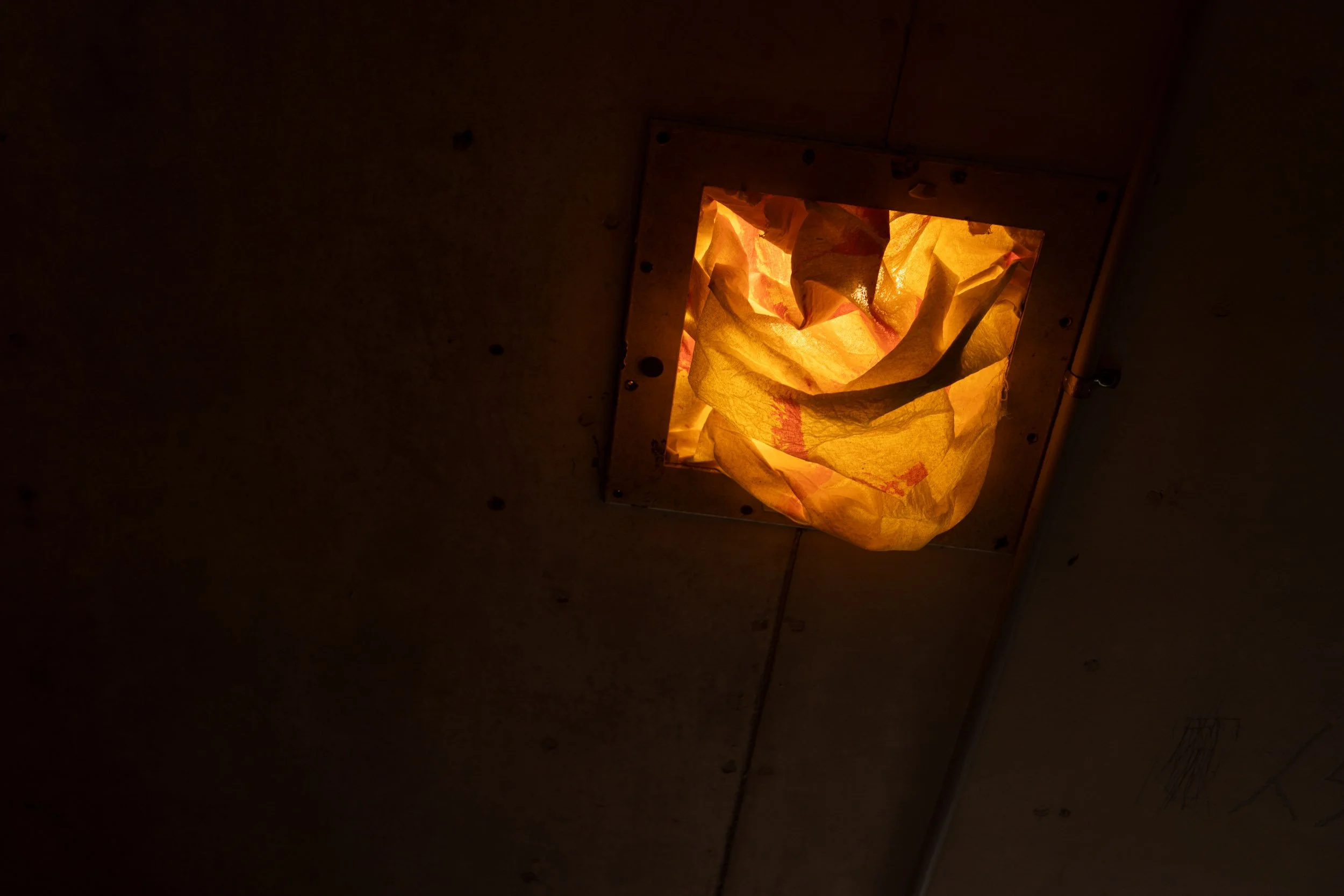
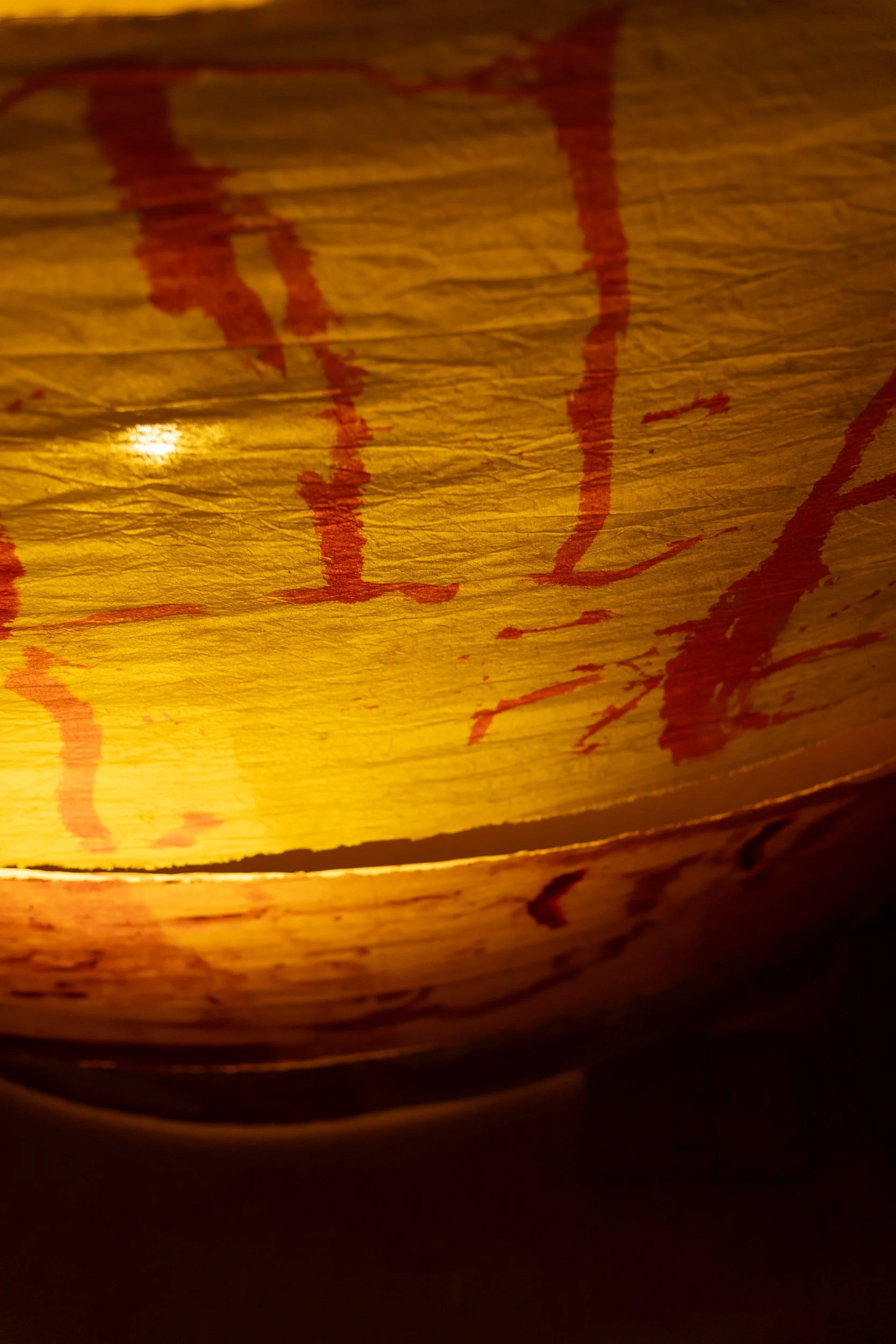
The final cell is enlivened by blankets of yellow calico draped from the ceiling, imprinted with sprawling lines of maroon that are suggestive of veins. Although their presence brings weight to the room, the fabric breaks to shed light on two shards of clay that lay forlorn on the floor. The figure occupying the previous room appears to be dissected and broken down across The Old Lock Up, vulnerable to onlookers.
For Odessa’s practice, which centres materiality and transferring energy to canvas by way of oil paint, this intimate exploration of cultural identity is new territory. These quiet cells provide solitude for Odessa to materialise a deeply complex theme. It is no secret that the western arts industry often exploits Otherness, whether that be pressuring People of Colour to explore racial identity through their art practice, or issues of cultural appropriation. bell hooks writes that without meaningful engagement, desire for racial ‘difference’ in mass culture does not necessarily tackle racism, but rather offers up an exotic Other to be consumed and commodified to “liven up the dull dish that is mainstream white culture.”[1] The gritty and morphed bodies sculpted by Odessa resist such objectification, obfuscating what a racially ambiguous body may look like and feel like.
Rather than being easily palatable, the creatures inhabiting The Old Luck Up are ambivalent and difficult to read, much like the experiences of those caught between the periphery of cultures. The fingerprints that Odessa Mahony-de Vries leaves behind on each sculpture remind us that the racially ambiguous body defies definition. As it stands, this very body is a multilayered site of the personal and familial constantly evolving over time.
By Mae Stanton
[1] bell hooks, “Eating the Other: Desire and Resistance,” In Black Looks: Race and Representation (Routledge, 2015), 21.